Sites built to be found and built to last
Hand-written front end, technical SEO from the first line, deployed to the edge — and handed over in full.
to launch
engineered on one build
rescue, visibility
quotes, agreed upfront
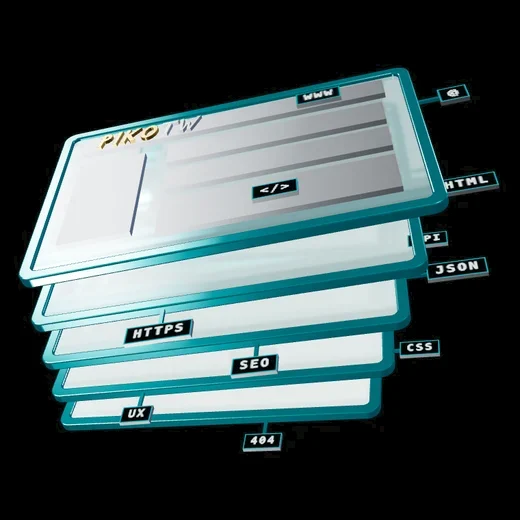
How a page is actually assembled
Structure, content, style, script, and the search layer that decides whether any of it gets found. Built in that order, deliberately. Drag it about.
Four symptoms worth taking seriously
Each of these is measurable, each costs real money, and each has a cause that can be named. Send the URL and I'll name it.
It loads like it's thinking about it
Four seconds on a phone connection and a decent share of visitors are gone before the page draws. Google measures the same delay and ranks accordingly.
Invisible where it matters
Page one belongs to competitors with worse work and better structure. If traffic only arrives when you pay for ads, the site isn't doing its job.
Hostage to the platform
The subscription creeps up, the plugins conflict, and leaving feels impossible. It isn't — but every month of “we'll sort it later” is rent.
Nobody knows how it works
Built by someone long gone, so every change is a risk and nothing gets changed. A site nobody dares touch has stopped being an asset.
Hand-coded, fast, and yours outright
This site is the sample: hand-written HTML and CSS on a global edge network, no page builder, no theme, no plugin stack, no platform rent. That isn't nostalgia — Google now grades sites on field data, what real visitors experience at the 75th percentile over a rolling 28-day window, and roughly half of mobile sites still fail it. Page-builder weight is exactly what fails.
The three numbers that matter: Largest Contentful Paint under 2.5 seconds, Interaction to Next Paint under 200 milliseconds, layout shift under 0.1. If whoever runs your site is still quoting “FID”, that metric was retired in 2024, which tells you something. Technical SEO gets built in from the first line rather than bolted on by a plugin afterwards — and the same clean structure now decides whether AI assistants can find and quote you at all.
You own the code, the domain and every account outright. If you ever want to move it, or hand it to another developer, nothing stops you — which is not true of most of what agencies ship.
Built from the ground up — names withheld, work described precisely
Client agreements keep the names and links off this page, so here's the honest version instead: two recent ground-up builds, described in full — both for industries I've run businesses in myself — and the rescue pattern I'm sent most. The one build I can show you is the site you're reading.
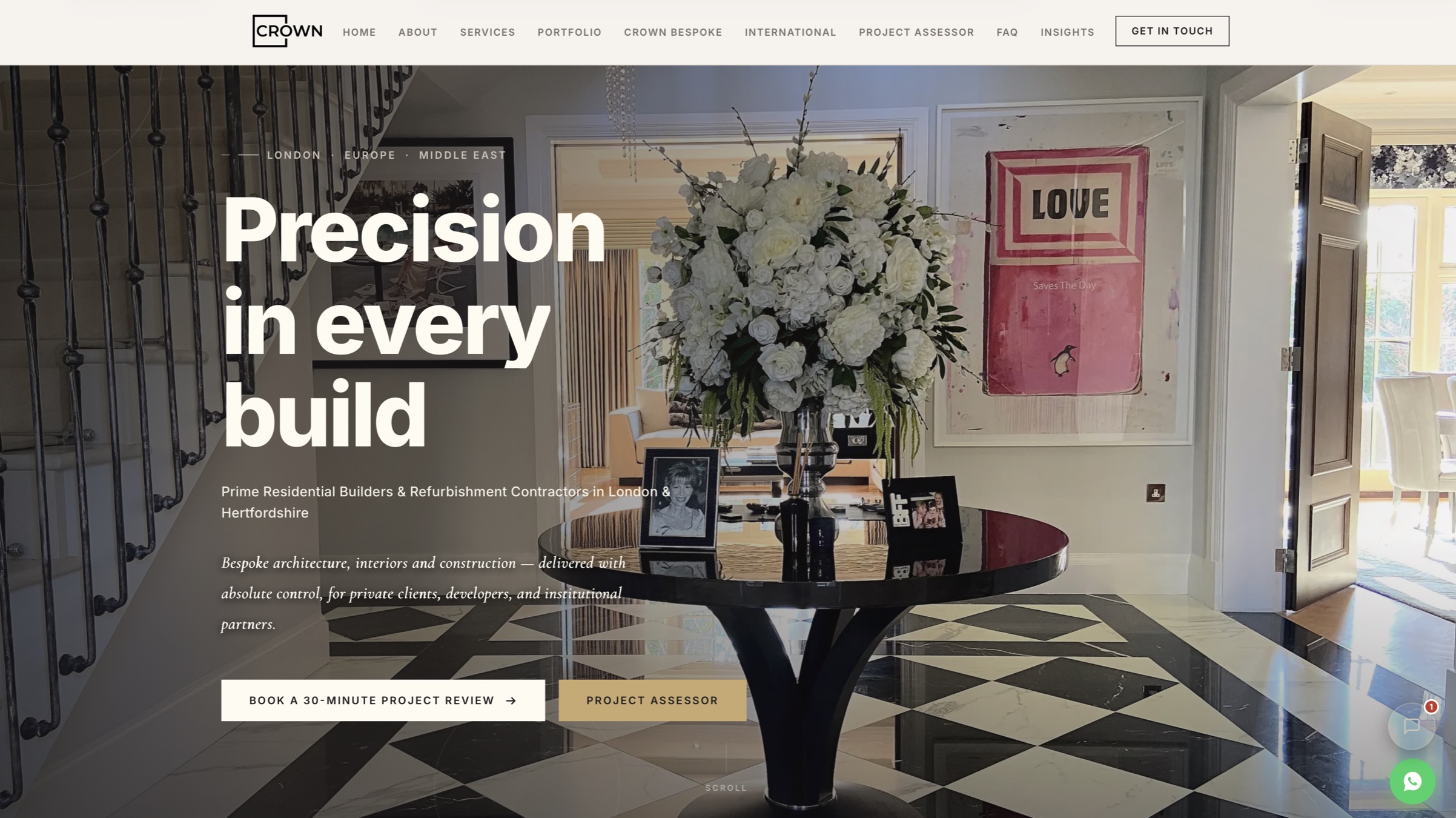
The prime London contractor
A full ground-up build for a luxury residential contractor serving prime central London: multi-page architecture, a five-stage process presented the way their clients buy, an interactive project-assessment tool that qualifies enquiries before the first call, an insights hub for search visibility, and accreditation and live-project displays doing the trust work. A site built to be forwarded around a family office, not just found.
The protection studio's lead machine
A certified automotive protection studio, built as a local-search system rather than a brochure: 40+ postcode-mapped area pages, individual landing pages per vehicle model, plain-language owner guides, a downloadable buying guide capturing enquiries by email, and WhatsApp-first contact flows. Structure doing the marketing, every page built to catch a search someone actually types.
The site that stopped working
The most common brief: a site that exists but is slow, dated, invisible or simply not producing enquiries. I diagnose what's holding it back — speed, mobile usability, structure, search visibility, conversion path — and give you the honest call: sometimes improving it wins, sometimes rebuilding is cheaper. I've made that call for countless businesses, in both directions.
What launches, and what you keep
The build is judged on measurements you can verify yourself, and everything ends up in your name.
Speed you can verify
Core Web Vitals in the green and load times you can test yourself — not a claim, a measurement in your own Search Console.
A search foundation
Schema, sitemap, redirects and clean indexation from day one, because retro-fitting SEO to a finished site is how budgets get wasted.
The keys, all of them
Code in your repository, domain in your name, analytics in your accounts. If we never speak again, nothing stops working and nothing is held hostage.
From scope to handover
Search strategy comes before design, because retro-fitting SEO to a finished site is how budgets get wasted.
Scope
What the site is for, who it's for, and what counts as it working.
Structure
Sitemap, keyword mapping and page hierarchy agreed before any design happens.
Build
Hand-coded, reviewed on staging, tested on real devices and real connections.
Launch & hand over
DNS, SSL, analytics, search console — plus the code, in your account.
Before you brief a web project
The questions that decide budgets, answered before you've spent one.
How much does a website cost?
Fixed price, quoted after scope — because a landing page and a thirty-page site with e-commerce are different jobs, and anyone quoting before asking is guessing at your expense. Every quote itemises exactly what's included — and I don't charge more because a project took longer than expected. The outcome is agreed first and priced accordingly.
How long does it take?
A landing page, about two weeks. A typical small-business site, two to six weeks from discovery to launch. The build is rarely the slow part — content decisions are — so I'll tell you up front which decisions sit on the critical path.
Can you fix what I have instead of rebuilding?
Often, yes, and it's usually cheaper. Send the URL and I'll tell you what's wrong with it — and whether it's worth saving — before you spend anything.
What do you need from me?
You stay the expert in your business; I handle the rest. Typically: your logo and branding if they exist, your business and service details, and any photography you'd like used. If any of that doesn't exist yet, I'll help create or source it — it's a normal part of the job, not a blocker.
What about hosting and maintenance?
A static build on Cloudflare's edge costs almost nothing to run and has no plugin stack to hack or update. Where a project needs a backend, the running costs are quoted with the build, not discovered afterwards.
Will it work properly on phones?
It'll be designed for phones first, because that's where most of your visitors are. Tested on real devices over real connections, not a resized desktop browser.
Do I really own it outright?
Yes — and this is the question more people should ask. You get the code, the accounts and the documentation. Moving to another developer would be inconvenient for me and effortless for you, which is exactly how it should be.
Site slow, invisible, or inherited?
Send me the URL — that's the whole brief. I'll reply with what's wrong, what it's costing you, and whether it's worth fixing, before you spend anything.
[email protected]